Viscosity and pour point are the two most fundamental physicochemical performance indicators for any lubricant.
Viscosity is a key indicator for evaluating the flow performance of lubricants, determining how well the lubricant maintains its film on friction components under high-temperature conditions and how effectively it supplies oil to moving parts at low temperatures. It directly or indirectly influences the friction, wear, and service life of the contacting surfaces. In internal combustion engine oils, oil pressure is also the most direct performance manifestation related to the viscosity of the lubricant.
We typically use viscosity-related performance indicators—such as 100°C kinematic viscosity, low-temperature dynamic viscosity, low-temperature pumpability temperature, high-temperature high-shear viscosity, shear stability of multigrade engine oils, and oil pressure in the main oil gallery during engine operation—as the fundamental criteria for evaluating the quality of engine oils.
Pour point refers to the lowest temperature at which a cooled sample of oil can still flow under specified test conditions; cloud point is the highest temperature at which the oil surface of a cooled sample ceases to move under specified test conditions. Both are expressed in degrees Celsius (°C).
Pour point is a conventional indicator used to measure the low-temperature fluidity of lubricants and other oils, though it is not entirely accurate. For the same oil product, the pour point is typically a few degrees higher than the cloud point, with a general difference considered to be 2–3°C. The cloud point was commonly used in the past, while the pour point is now internationally standardized.
Another parameter related to pour point and cloud point is the cloud point. Relatively speaking, the cloud point is associated with solid paraffin in the oil, while the pour point depends on the wax content and crystal structure. Therefore, differences in base oils for lubricants—such as type, grade, and refining depth—affect the selection of pour point depressants.
Viscosity improvers and pour point depressants are essentially specific applications of high-molecular compounds in petroleum products. They significantly influence the rheological properties of oils at both high and low temperatures, the formation of high-temperature deposits, filtration performance, automobile exhaust emissions, and the development of energy-saving products. Therefore, it is essential to pay sufficient attention to viscosity improvers and pour point depressants.
Pour point depressant: a water-soluble linear high-molecular polymer, whose main characteristic in the polymer chain is the presence of alkyl side chains similar in structure to paraffin hydrocarbons, forming a comb-like chain.
Common types of pour point depressants include:
Alkyl naphthalene

Polymethacrylate:
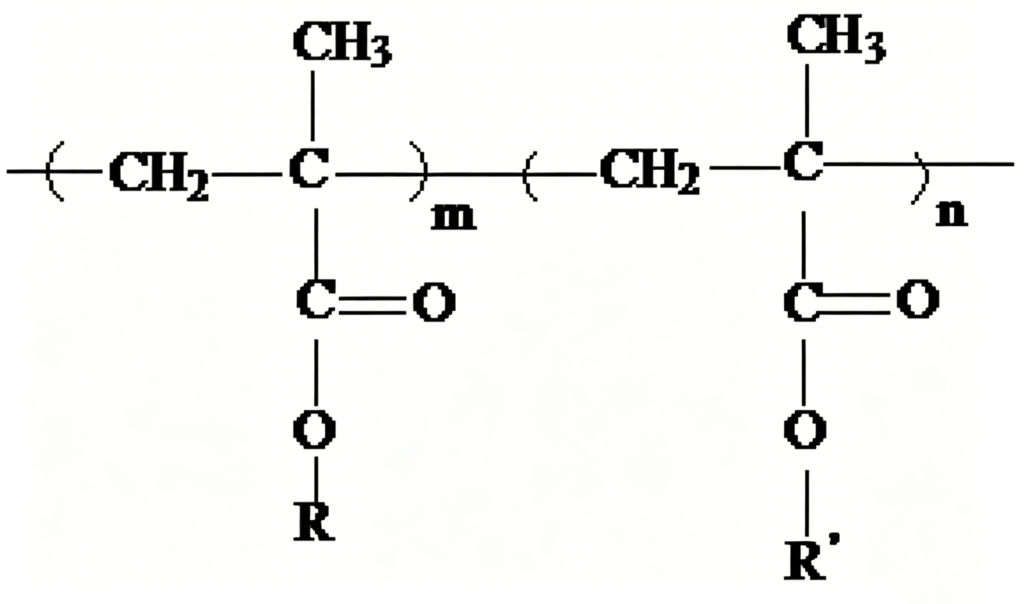
Poly-alpha-olefin:

Vinyl acetate/butadienedioic acid copolymer:
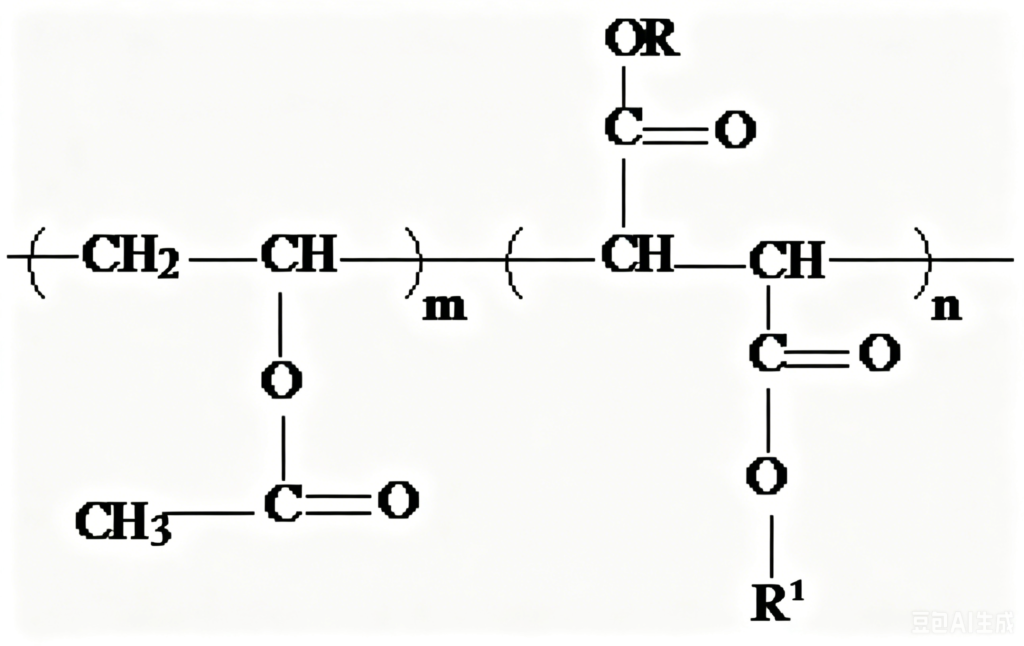
The mechanism of action of the anti-foaming agent will be discussed in the next section. (To be continued)
Author: Li Yunpeng, Institute of Petrochemical Science, Professor, Senior Engineer, and Postgraduate Supervisor. After graduating as a postgraduate from Nankai University in 1987, he joined the Institute of Petrochemical Science and has been engaged in the research and development of lubricating oils and additives for nearly 30 years. He has published over 70 papers in domestic and international academic journals, holds 15 invention patents, and the products he led in developing have won the first prize of national science and technology once, along with several other awards.