It is generally believed that chain-like wax molecules in oil grow stronger intermolecular affinity as temperature drops.
When the affinity between wax molecules exceeds that between wax molecules and solvent (i.e., hydrocarbon molecules of base oil), wax molecular chains align parallel along the principal axis and aggregate to form crystal nuclei. Possessing sufficient surface energy, the crystal nuclei can no longer dissolve, leading to a new phase state. This critical temperature is defined as the cloud point.
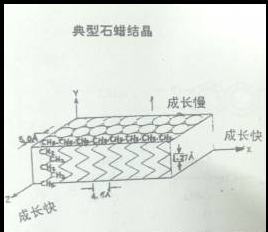
Pour point depressants modify the shape, size and quantity of wax crystals via eutectic action and/or adsorption, restraining the formation of wax crystal networks and maintaining the fluidity of oil products. The adsorption mechanism of depressants on wax crystals is relatively intuitive. Eutectic action involves eutectic reaction, which refers to a reaction wherein liquid of fixed composition crystallizes into two distinct solid phases simultaneously at a specific temperature. As a reversible equilibrium reaction, it can also be interpreted conversely: two specific solids may combine into liquid of fixed composition. Though not entirely precise, this interpretation facilitates understanding of depressant working principles. A mixed solid solution features a component ratio that delivers the minimum melting point. Simply put, eutectic substances transform directly between solid and liquid states without plastic deformation, representing an equilibrium reaction generating two solid phases from liquid.
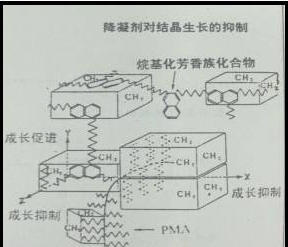
After pour point depressants such as alkyl naphthalene and polymethacrylate are blended into paraffin crystals, the growth of paraffin crystals is inhibited.
Microscopic observation at 320 times magnification reveals distinct crystal morphology differences of 150SN waxy base oil at -20 ℃ before and after adding 0.5 mass% polymethacrylate (PMA).
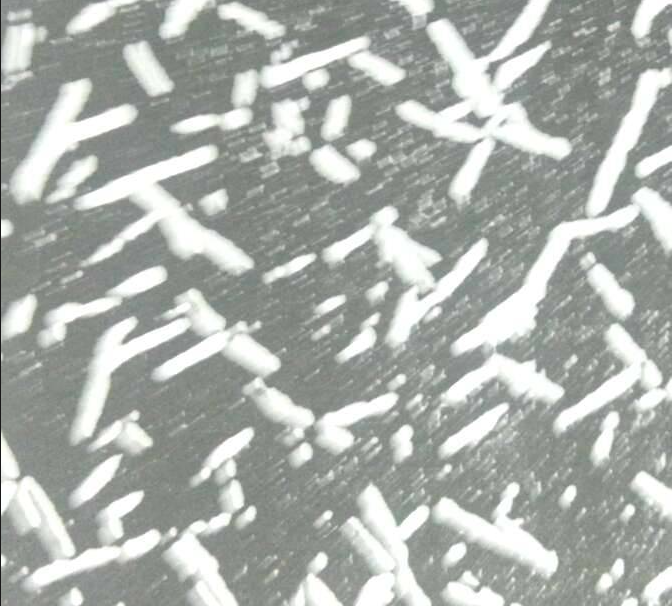
Without pour point depressant (320×)

With 0.5 mass% PMA added (320×)
- Chemical structure of pour point depressants: average carbon number and carbon distribution of side chains
- Properties of base oil: wax content, pour point, viscosity and hydrocarbon composition
- Other additives: interference mainly from viscosity modifiers