Lubricant additives act as core functional raw materials to tackle multiple difficulties in contemporary lubricant formula design. As a professional additive manufacturer, Motechshield sorts core technical points for lube formulators.
1. Base Oil Matching Obstacle
First, different grades of base stock require matched lube additives. Group III synthetic base oil has distinct polarity compared with Group I mineral oil. Improper additive dosage will trigger oil turbidity or precipitation after blending. Many factories fail to adjust additive proportion when switching raw base oil sources.
2. Low & High Temperature Performance Balance
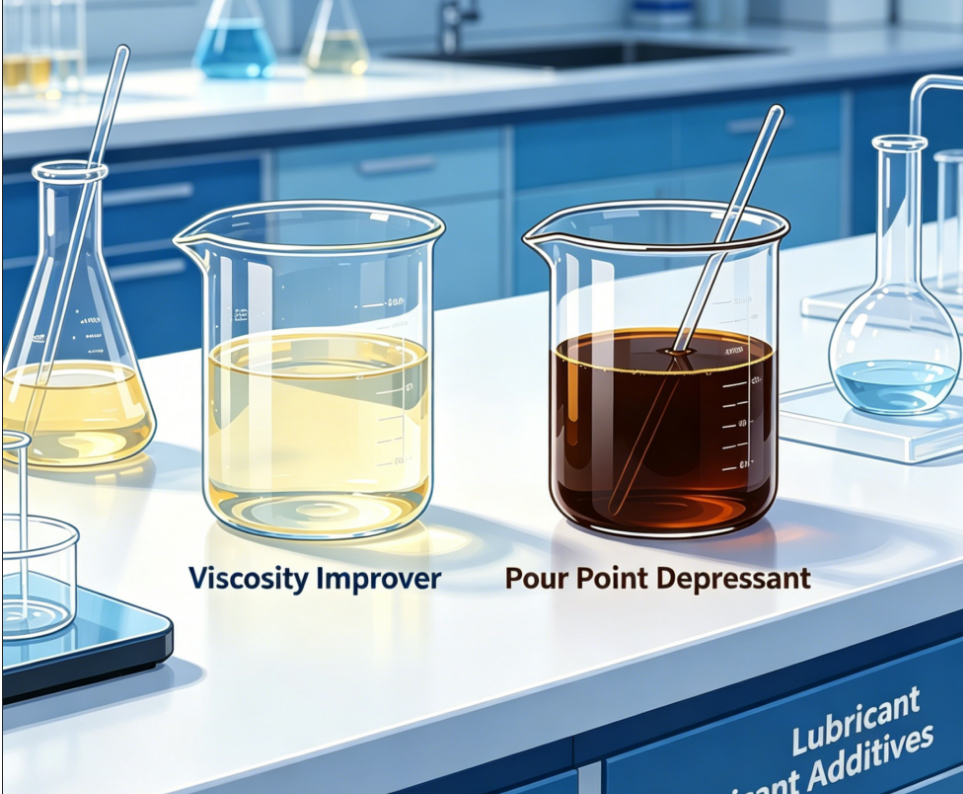
In addition, balancing high-temperature anti-oxidation and cold-flow property is another common headache. Pour point depressant (PPD) improves low-temperature fluidity, while VII viscosity improver stabilizes viscosity across wide temperature range. Reasonable compound dosage of these two lubricant auxiliary chemicals helps finished oil meet multi-grade viscosity standards.
3. Updated Emission Standard Restriction
Furthermore, stricter global vehicle emission rules push reform on additive formulas. New API SP/CK-4 standards limit harmful element content inside finished lube. Our R&D team optimizes additive packages to satisfy latest industry specifications and lower formulation difficulty for clients.